Meet the team: Introducing Interior Architect Alina Tynys
Part of the Kakadu team since 2021

Can you tell us about yourself and your background?
I’m Alina, a designer (B.A.) with a degree in Interior Architecture and Furniture Design. I’ve been working in the field since 2017, first at an architecture firm as part of an interior and workplace design team, and at Kakadu since 2021.
What is your role at Kakadu, and what types of projects do you typically work on?
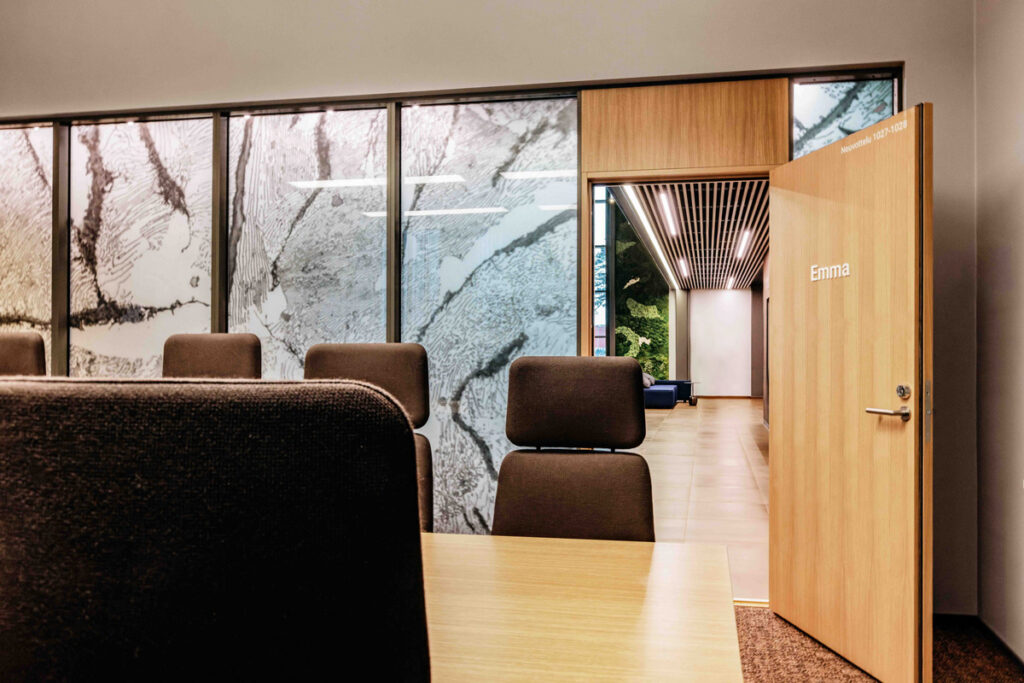
At Kakadu, I work as an interior architect in the workplace design team. I manage some of our larger property owner clients, for whom we produce, among other things, spatial layouts to support the leasing and marketing of properties and various spaces. This adds a dynamic pace to everyday work and calls for agile responses, along with careful planning and allocation of tasks, often on short notice.
I’m also actively involved in various workplace projects for Senate Properties, for whom Kakadu is a framework agreement partner in interior design. Throughout my career, I’ve worked more or less extensively with government agencies, so many properties and work environments are very familiar to me. In addition, I design diverse workplace environments for various corporate clients, which adds further variety to the projects I work on.
What inspires your design work?
I draw a lot of inspiration from everyday environments. I suffer from the common ‘designer’s disease’ in my free time, constantly observing different design approaches and material solutions, which often inspire my own work. I also actively follow other professionals in the field, which helps to identify subtle signals about where the industry is heading and which visual trends are emerging next.
Tell us one fun or surprising fact about yourself
I’ve been riding horses my whole life, and I relax best at the stable. Being with a horse requires presence and a friendly attitude, so in those moments, all worries and stress completely fade away.
What types of clients or customers do you work with in your projects?
In my projects, I encounter a wide variety of clients and project owners. In all workplace design projects, whether for government agencies or corporate clients, end users play a central role, and their needs and preferences are always taken into account in the design process. On the property owner side, I work with people in various roles, such as asset managers and technical managers, who often have different perspectives and objectives. Designs are tailored to accommodate these perspectives, ensuring the final outcome serves both the property owner and the end users in the best possible way. Additionally, every project involves close collaboration with other design professionals and partners, which brings diverse viewpoints to the work and requires the ability to consider the needs of different disciplines in my own designs.
I have received particularly positive feedback from clients for my customer-oriented approach. In addition to interior and visual design, clients have felt comfortable asking for help with practical challenges related to the project, especially during the move-in phase.
Alina Tynys, Interior Architect, Kakadu
How do government workplace projects differ from other workplace projects?
Designing government workplaces involves many layers, and besides our own design responsibilities, it’s crucial to understand the bigger picture and the factors driving the changes. For example, even if the task is limited to planning loose furniture, it’s crucial to understand the scope of the entire project, since technical and spatial solutions directly influence which furniture can be specified and how it can be arranged within the space. It’s also necessary to understand the scope and principles of different procurement models. Circular economy principles are always strongly present in these projects and must be considered from the very beginning.
How are users’ needs taken into account in the design process?
Our approach to interior design is always participatory, tailored to the scope of the project and the client’s needs. The work is highly interactive, involving the client, end users, and other design professionals, and we openly discuss different solutions to collaboratively find the best outcome. We base our design on open communication, active listening, and teamwork, as incorporating multiple perspectives often leads to the best results.
Which of your skills or strengths has been especially appreciated by clients?
I have received particularly positive feedback from clients for my customer-oriented approach. In addition to interior and visual design, clients have felt comfortable asking for help with practical challenges related to the project, especially during the move-in phase. Being practical and maintaining open communication helps build a strong rapport with clients, which often continues even after the project is completed.
What do you like best about working at Kakadu?
The best part about working at Kakadu is, of course, the colleagues and our close-knit team. Working in an open and supportive environment is enjoyable, and everyone shares the same sense of humor.
Let’s talk more!
Could Alina and the rest of our workplace design team be of help to you?
Contact Kristiina or explore our services here.
Kristiina Kaitala
Partner
Business Director
Interior Architect SIO
+358 40 572 3859
kristiina@kakadu.fi